How to Spot a Scam Text or Email (Real Examples)
Scam texts and emails have gotten a lot more convincing over the years. Gone are the days when they were all obvious bad spelling and "you have won a prize." Today's scams can look almost identical to a real message from your bank, a delivery company, or even a family member. The good news? Once you know what to look for, most scams become much easier to spot, and this post will show you exactly what those warning signs look like.
Why this matters
Scammers don't need to trick everyone; they just need to trick a small percentage of the thousands of people they message. That's why these messages are sent out in bulk, and why learning to recognize them is one of the simplest ways to protect yourself, your money, and your personal information.
The most common types of scam messages
1. The "delivery problem" text: You get a message saying a parcel couldn't be delivered and you need to "click here" to reschedule or pay a small fee. It often looks like it's from a courier company you actually use.
Red flags: You weren't expecting a delivery, the link doesn't lead to the courier's actual website, or you're asked to pay a small, random fee to "release" your parcel.
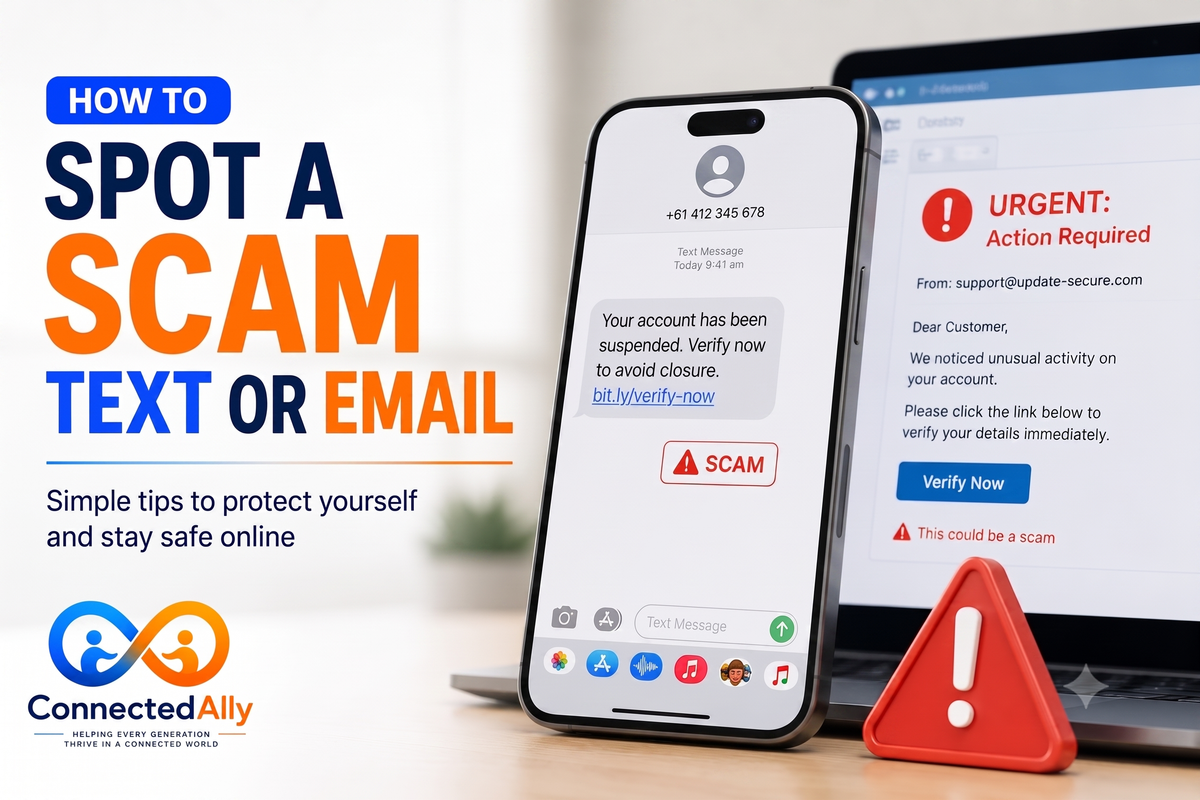
2. The "your account has been suspended" email: This one impersonates a bank, streaming service, or online store, warning that your account will be locked unless you "verify your details" immediately.
Red flags: Urgent, scary language designed to make you panic and click without thinking; a generic greeting like "Dear Customer" instead of your name; a request to enter your password or card details on a page that opens directly from the email.
3. The "family member in trouble" message: A text or WhatsApp message pretending to be from your child or grandchild, saying they've lost their phone and urgently need money sent to a new account.
Red flags: A new, unrecognized phone number claiming to be someone you know; urgency combined with a request for money; reluctance to speak on a phone call to "prove" who they are.
4. The fake prize or refund: A message claiming you've won a competition you never entered, or that you're owed a tax refund, and just need to click a link to claim it.
Red flags: You don't remember entering anything; the message asks for bank details or a small "processing fee" to release a supposed prize.
The warning signs that apply almost everywhere
- A sense of urgency. Scammers want you to act fast, before you've had time to think it through. "Act now," "24 hours only," and "immediate action required" are big clues.
- A link that doesn't quite match. Hover over (or press and hold on a phone) a link before tapping it. If it says it's from your bank, but the web address looks strange or unfamiliar, that's a red flag.
- Requests for personal or payment details by text or email. Legitimate banks and companies will never ask you to confirm your full password, PIN, or card number this way.
- Odd sender details. Check the actual email address, not just the display name. A message "from Amazon" sent from a random string of letters and numbers is not from Amazon.
- Unexpected contact. If you weren't expecting a delivery, a refund, or a message from that person, treat it with extra caution.
What to do if you're not sure
- Don't click the link. Instead, go directly to the company's official website or app by typing the address yourself, or call them using the number on their official site — not one provided in the message.
- Contact the person directly another way. If a "family member" texts to ask for money, call them at their known number to confirm it's really them.
- When in doubt, wait and check. A genuine company or person won't mind you taking a few minutes to verify. Scammers rely on you not doing that.
- Report and delete. Most email providers let you report a message as phishing, and most phone providers let you report spam texts; this helps stop the scam from reaching others too.
The bottom line
Scam messages are built to catch you off guard, and even careful people fall for them from time to time; it's nothing to be embarrassed about. The best defense is simple: slow down, check the details, and verify through a separate, trusted channel before you click, reply, or send anything. If something feels off, it usually is.
If you ever come across a message you're unsure about, feel free to get in touch; we're always happy to help you check it over.